A reading about luck or rest next month should not sound like someone announcing your fate from a balcony. Most of the time it begins in the moment you look at next month and feel both hope and dread, like the blank calendar is judging you before anything has happened. You are not wearing a white robe. You are checking your phone with one hand, moving a cup from one side of the table to the other, and wondering why the same little problem keeps following you into different rooms. That is where tarot is useful. It meets the day where the day actually lives: receipts, dishes, old moods, calendar alerts, and the private sentence of, I cannot keep doing this exactly the same way.
Before you pull cards, make the question smaller than your fear. Ask what is moving, what needs your attention, and what can be done by a real person with a tired body. I like a five-card spread for this: what is moving under the surface, what my body already knows, where I am making the answer too complicated, what practical detail needs care, what small action would make the reading real. Write the cards down. Do not immediately make them beautiful. Let the first reaction be awkward. Sometimes the first honest response to a card is not wisdom. It is, oh no, I know exactly what that means, and I really wanted not to know.
If Wheel of Fortune appears, the reading is probably not asking you to panic. It is asking you to admit that something already has a different shape. People call change sudden because they only notice it when the door finally closes. But the door was swollen for weeks. The handle stuck. The room smelled stale. You kept walking around a payday that already has a job before it lands and saying you would deal with it later. Wheel of Fortune says later has become a location you cannot live in anymore.
Four of Swords can feel dramatic, and sometimes it is. In ordinary life, though, this card may show the moment a plan stops pretending to work. A payment is late. A promise is thin. A conversation says the quiet part out loud. The warning is not always that something terrible is coming. The warning may be that your body is tired of helping you maintain a version of normal that costs too much. I do not love learning this through inconvenience. Nobody does. But inconvenience can be direct.
When Nine of Cups turns up, listen for the call back to yourself. Not the grand spiritual self, necessarily. The regular self who knows which drawer the charger is in, who notices when a room feels wrong, who has been quietly tracking every excuse. This card often asks for an honest review. What did you say yes to because you were embarrassed? What are you still defending because changing your mind would make you look inconsistent? That kind of truth is not glamorous. It is often found barefoot in the kitchen at midnight.
Ten of Wands brings the question of leaving, but leaving does not always mean packing a bag or ending a relationship. It can mean leaving a habit, a fantasy, a constant explanation, a way of making yourself available to people who treat your availability like weather. You may not have a clean dramatic exit. You may have a smaller one: not replying tonight, not buying the thing, not volunteering, not rehearsing a conversation for the fifth time while brushing your teeth. Small exits still count.
The practical card matters more than people admit. If Ace of Pentacles appears, look at scheduling, money, sleep, and the physical limits of your day. Tarot is not offended by logistics. It can point straight at a phone alarm you keep snoozing with real shame and say, this is part of the spiritual weather too. A person cannot interpret signs clearly while surviving on snacks, resentment, and three hours of sleep. Sometimes the best alignment is eating before you answer the message. Sometimes the sacred advice is to move the appointment because you are already stretched thin.
Six of Pentacles asks about direction. Not pressure. Direction. There is a difference, though I forget it constantly. Pressure says you must solve everything today or you are failing. Direction says turn the wheel a little and stop driving with your eyes on every possible disaster. If this card appears, choose one action that can be done in a normal afternoon. Send the email. Cancel the thing. Wash the cup. Ask the question. Put the card back on the table and do the one step it actually named.
I would not read this topic as a promise that life will become cleanly divided into before and after. Real change is messier. You can decide something and still feel sad. You can rest and still worry. You can choose correctly and still miss the old arrangement because it was familiar. The cards are not disappointed by that. They are usually kinder about human inconsistency than we are. They show the pattern, then let you have a body inside the pattern.
Pay attention to the first card that annoys you. Annoyance is useful. If the Four of Swords makes you roll your eyes, you may be more tired than you want to admit. If Justice makes you defensive, maybe the details matter. If the Page of Swords makes you want to explain yourself, maybe you have been collecting information instead of making a decision. I have had readings where the least mystical card was the one that followed me around all day, nagging quietly beside the sink.
Also notice where you want tarot to give permission for something you already know. You may want the deck to approve the message, the purchase, the silence, the second chance, the refusal. Ask the card, yes, but listen to the part of you that relaxes or tightens before you start interpreting. That first body response is not always the whole truth, but it is data. Your shoulders, stomach, jaw, and breath keep records your polished explanation may try to edit.
For the next few days, keep a plain record. Date, card, one sentence. No long performance. No perfect journal spread unless that genuinely helps you. Write, I pulled Wheel of Fortune and noticed a clean towel still warm from the dryer. Write, I pulled Ace of Pentacles and paid the bill. Write, I pulled Four of Swords and did not send the angry text. Tiny records make the reading visible. They stop tarot from becoming a mood you had for twenty minutes and then forgot while scrolling.
If another person is involved, slow your interpretation down. A difficult card does not always mean they are bad. A sweet card does not always mean they are safe. Ask what behavior is present. Are they consistent? Do their words match their timing? Do you feel more like yourself after contact, or do you start checking your phone like a person waiting for weather updates from a nervous sky? Sorry, that image is a little dramatic. But you know the feeling. It is not peace.
The cards can also point to your own red flags, which is rude but useful. Maybe you disappear when you need help. Maybe you say yes and then punish people with resentment. Maybe you call it intuition when it is actually fear with better lighting. Maybe you keep asking for a sign because an ordinary boundary feels too plain. Nobody enjoys seeing this. I usually want to bargain with the deck at this point. Still, the reading gets better when you let yourself be implicated without making it a shame festival.
A good ritual for this topic is almost embarrassingly simple. Put the card where you will see it in the morning. Next to keys, not hidden under a crystal tower you will forget exists. Choose one verb from the reading: rest, check, ask, leave, repair, wait, begin. Then do one action that matches the verb. If the action cannot fit into a real day with email, errands, and a tired body, make it smaller. Spiritual advice that only works for an imaginary life is not advice yet.
Watch the language you use around timing. If you say, nothing is happening, check whether something quiet is happening. Quiet counts. You may be sleeping differently, wanting different food, avoiding different people, or noticing the exact moment your smile becomes fake. Those are not minor signs. They are the small weather stations of the inner life. Tarot often speaks through them because ordinary days are where most of us actually live.
If the reading feels heavy, do not keep pulling cards until you find one that flatters you. I know the temptation. One more card for clarification, then one more to clarify the clarification, then suddenly the table looks like a crime board and you feel worse. Stop at the spread. Drink water. Step outside if you can. Let the message be incomplete for a while. Some truth needs to be carried around before it becomes usable.
If the reading feels hopeful, ground it quickly. Hope can become another way to avoid the work. Pulling the Ace of Pentacles is lovely, but where does the seed go? Pulling the Star is gentle, but what would healing look like at 4:30 p.m. on a weekday? Pulling the Wheel of Fortune can mean luck, yes, but luck still needs you to answer the call, submit the form, take the walk, or say the clean sentence you keep dressing up in nervous jokes.
There is also the matter of shame. Many people come to tarot when they feel behind. Behind in healing, behind in love, behind in money, behind in becoming the calm person they imagined they would be by now. Please do not make this reading another scoreboard. Ask where you are, not where you should be. Ask what is available, not how to punish yourself into a better timeline. The cards are more useful when they are not forced to become a judge.
One sign that the reading is landing correctly: it makes one part of life feel less foggy, even if it does not make it easier. You may still have to make the call. You may still have to rest when you wanted to prove yourself. You may still need to accept that a message you want to answer but cannot make your face move has been telling the truth for a while. Clarity is not always comfort. Sometimes clarity is just fewer lies between you and the next honest step.
End the reading by naming what you will not do. I will not chase ten interpretations. I will not text from panic. I will not call exhaustion laziness. I will not make a spiritual emergency out of a logistical mistake. I will not ignore the practical detail because it is not poetic enough. This kind of refusal is protective. It gives the reading edges. Without edges, even good insight can leak into overthinking.
Then name what you will do. One sentence. One action. One place in the body to soften. This is where tarot becomes less theatrical and more useful. You do not need to understand the whole season today. You need to meet the part of it that has arrived in your actual hands. The card, the cup, the message, the bill, the silence, the small truth you keep walking around. Start there. Let the rest remain partly unresolved. It probably will anyway.
By the end of this reading, the question may have changed. You may have asked about luck or rest next month, but the deck may answer with a smaller human question: what are you willing to stop pretending about? What would be kinder if you admitted it now? What would become easier if you stopped needing the timing to look impressive? I do not always like those questions. They are not decorative. But they are often the ones that move a life, quietly, before anyone else can see it.
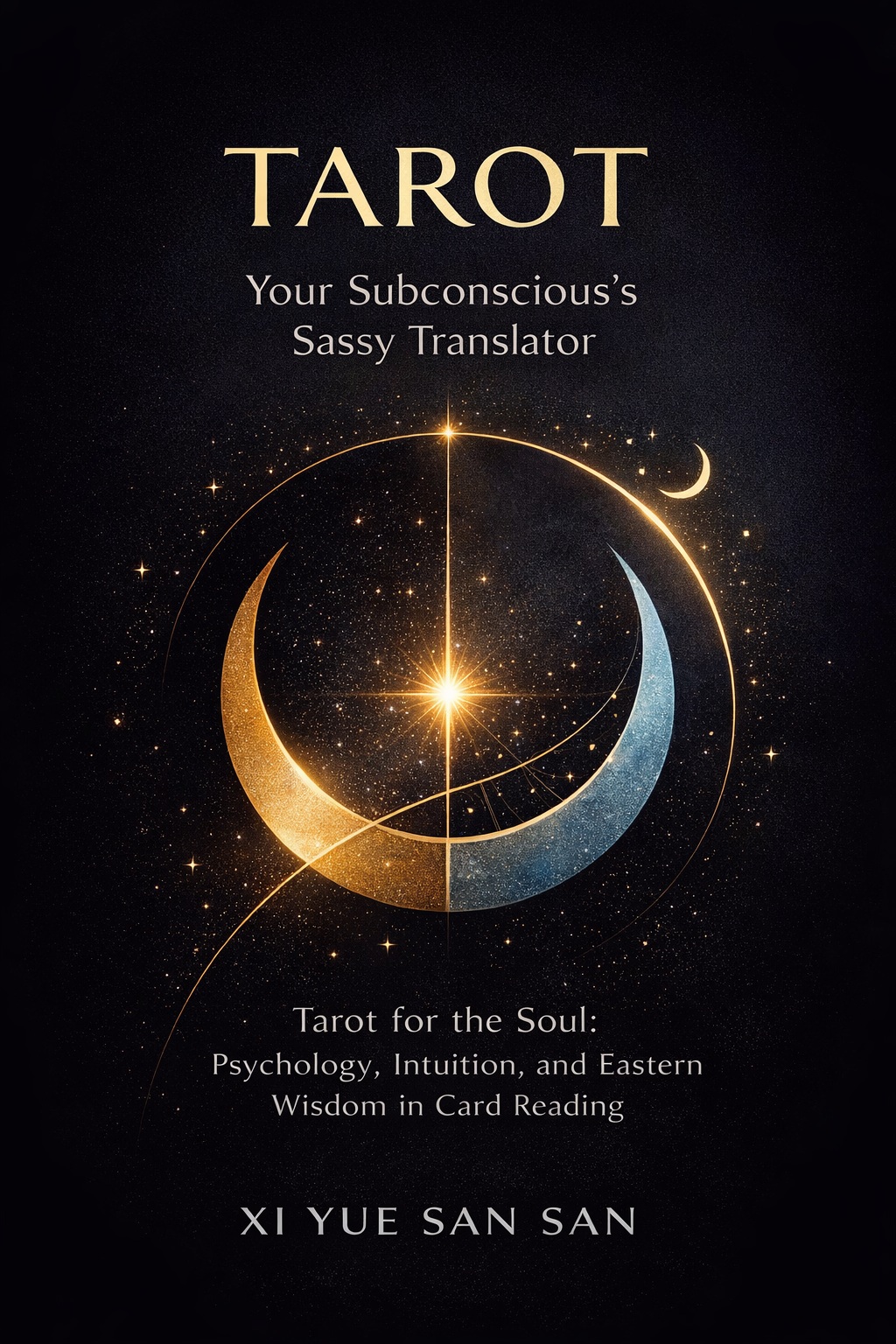
Book recommendation
Tarot: Your Subconscious's Sassy Translator is a useful companion for these essays: direct, psychological, and grounded when a reading needs to sound more honest than pretty.
Open the book page